Three Paul Smith's College Alumni Published in The Adirondack Journal of Environmental Studies
Articles reflect the depth of inquiry that defines a Paul Smith's College education
Paul Smiths, NY (02/13/2026) — Three recent Paul Smith's College graduates have published research in Volume 27 of The Adirondack Journal of Environmental Studies, a peer-reviewed academic journal that exists to foster a dialogue about the broad range of issues that concern the Adirondacks and Northern Forest. Together, the articles reflect the depth of inquiry that defines a Paul Smith's College education-research grounded in place, informed by community, and driven by real-world questions facing the Adirondack Park.
In Indigenous Ethnobotany and Wetlands: Informing EPA Wetland Assessments with Indigenous Knowledge in Akwesasne and the Adirondacks, Keeley Jock '23 centers Indigenous knowledge systems as essential tools for environmental assessment. She demonstrates how ethnobotanical knowledge-rooted in generations of relationship with wetlands-can strengthen federal assessment frameworks, offering more holistic approaches to understanding wetland health and function. Her research was conducted alongside Stephen Langdon, Director of the Shingle Shanty Preserve, and with advising support from Dr. Curt Stager.
Damien Thompson '25, contributing to research led by Paul Smith's College Adirondack Watershed Institute Director of Research Dr. Michale Glennon, examines changes in peatland ecosystems in Afforestation and the Potential for Increased Habitat Quality for Mammalian Nest Predators in an Adirondack Peatland. Conducted in Barnum Bog at the Visitor Interpretive Center, their research suggests that increases in tree cover in peatland ecosystems may improve habitat conditions for mammalian species. This has implications for boreal bird species predation and adds to conversations about the impacts of climate change on peatlands more broadly.
"Research conducted alongside students and in support of their growth is especially meaningful to me," said Dr. Michale Glennon. "With access to real, hands-on field experiences, our students are able to turn their learning experience into contributions that resonate well beyond Paul Smith's College."
In Curating Adirondack Nature within Museum Spaces: A Case Study of the New York State Museum's Adirondack Hall, Katherine Hemsley '24 explores how museums shape public understanding of the Adirondacks. Her research finds that traditional exhibits often frame nature through economic or extractive lenses, while more community-centered and relational approaches can deepen visitors' understanding of conservation, culture, and stewardship. Through this, she underscores the importance of interpretation in shaping how people value and protect Adirondack landscapes.
"We celebrate the achievement of our students in contributing to such a respected regional publication," said Brett McLeod, Paul Smith's College Dean of Faculty. "Their work reflects what makes a Paul Smith's College education distinctive-learning by doing and contributing knowledge that has an impact."
Volume 27 of The Adirondack Journal of Environmental Studies is available online through the Adirondack Research Consortium.
About Paul Smith's College:
At Paul Smith's College, it's about the experience. As the only four-year college located in the Adirondack Park in upstate New York, Paul Smith's provides real-world, hands-on learning in fields such as business and hospitality, culinary management, forestry, environmental sciences and natural resources. We are able to draw on industries and resources available in our own backyard while preparing students for successful careers anywhere. Our community of resourceful, enterprising, supportive and adventurous individuals collectively provide experiential education, student support in the classroom and beyond, and meaningful opportunities for our alumni. We pride ourselves on research and advocacy on issues that improve our planet and the lives of the people who inhabit it. Learn more at paulsmiths.edu.
Media Attachments

Keeley Jock '23 presenting her research at TEDxTupper Lake in October 2024. Photo Credit: From TEDx Talks YouTube Channel
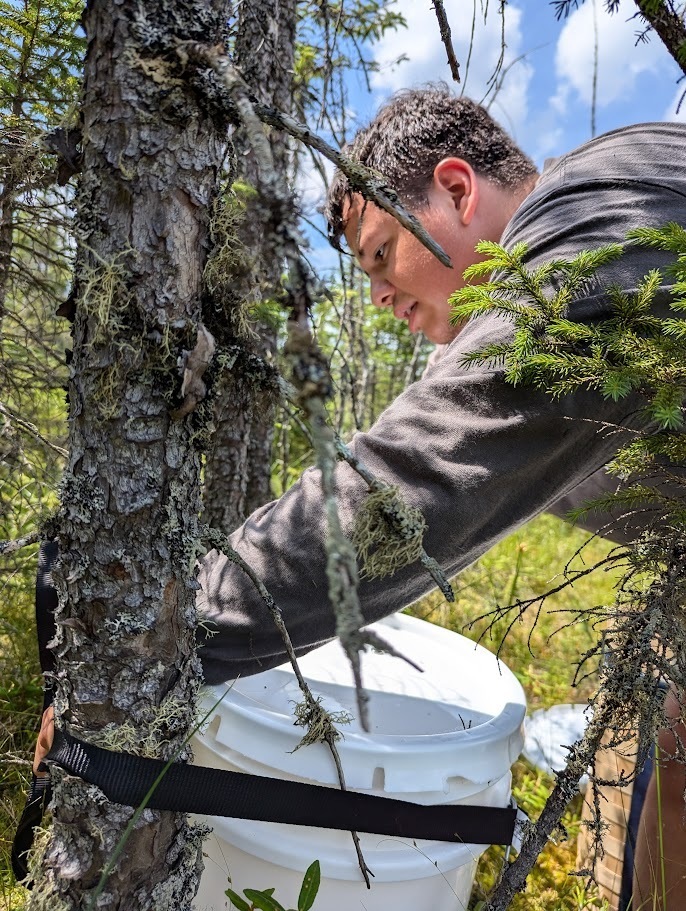
Damien Thompson '25 conducting research in Barnum Bog. Photo Credit: Paul Smith's College Adirondack Watershed Institute

Paul Smith's College
Ben Brosseau, Director of CommunicationsShare this Story


Recent News
- Paul Smith's College welcomes prospective students to its Fall Undergraduate Open House 2025
- Paul Smith's College reports significant growth for Fall 2025, bucking national enrollment trends
- Maureen Cunningham New Executive Director of Paul Smith's College AWI
- Paul Smith's College and U.S. Biathlon Announce New Scholarship
- Paul Smith's College to Host Citizen Preparedness Corps Training as Part of Regional Emergency Management Conference
- U.S. Biathlon and Paul Smith's College Extend Education Partnership Through 2028
- Paul Smith's College Invites Landowners to Protect Streamside Habitats
- Paul Smith's College Launches Watercraft Inspection Season
- Paul Smith's College Awarded Grant for Mobile Emergency Operations Center
- Communities Invited to Shape Climate Resilient Strategies