Paul Smith's College Adirondack Watershed Institute Urges Boaters to Help Stop Aquatic Invasive Species This Summer
PAUL SMITHS, N.Y. (03/30/2026) — As boating season approaches, recreational boaters are being urged to take simple steps that protect Adirondack waters from the growing threat of aquatic invasive species. A quick inspection before launching - removing any plants or small-bodied aquatic animals such as zebra mussels - can prevent long-term damage to the region's lakes, rivers, and other waterbodies.
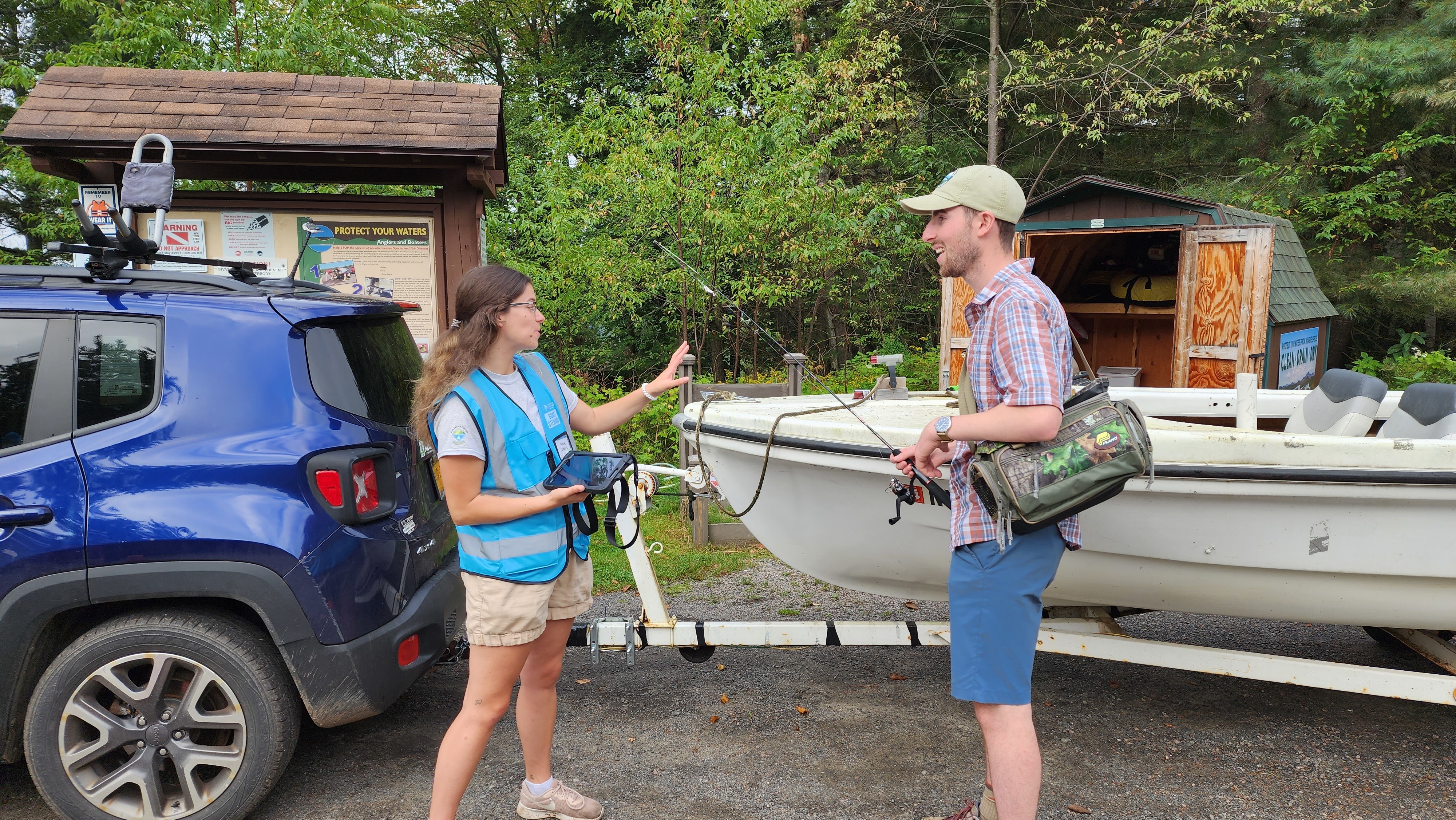
This summer, watercraft inspection stewards will staff more than 60 boat launches and decontamination sites across the Adirondack Park, a program run by the Paul Smith's College Adirondack Watershed Institute (AWI) in partnership with the New York State Department of Environmental Conservation (DEC). Stewards play an important role in protecting the region's waters by educating the public and removing aquatic invasive species from vessels as they are launched into and retrieved from waterbodies. AWI is now hiring to fill these essential positions.
If you're visiting the Adirondacks between Memorial Day Weekend and Labor Day, you are likely to meet a watercraft inspection steward at one of the many boat launches in the park. Their work is one of the most effective tools the region has to prevent the spread of aquatic invasive species.
"An invasive species can have a lasting and costly impact on a lake, but a quick and free inspection at a boat launch is often all it takes to prevent it," said Brett Wimsatt, Invasive Species Program Director at the Paul Smith's College Adirondack Watershed Institute. "Boaters can make a real difference in keeping waterbodies healthy, by taking a few minutes to have their vessels inspected, and if needed, decontaminated by one of the region's many stewards. This quick action helps protect the waters and ecosystems that our communities depend on."
AWI is currently seeking applicants for watercraft inspection stewards near Inlet, Raquette Lake, Blue Mountain Lake, Long Lake, Newcomb, Paul Smith's, Saranac Lake, Lake Placid, Speculator, Schroon Lake, Indian Lake, Westport, Willsboro, and Northville. Students, retirees, and seasonal workers all make up AWI's diverse team of 120 seasonal stewards. Pay starts at $19.50-$20.50/hour. The season runs from May 22 through Labor Day, with full-time and part-time positions available. Interested applicants should apply through the Paul Smith's College careers webpage.
"Invasive species can alter aquatic habitats, reduce native biodiversity, and impact local economies and recreational activities," said Scott Jamieson, DEC State Watercraft Inspection Steward Program Coordinator. "The Adirondack Watershed Institute (AWI) of Paul Smiths College, contracted by DEC, is one of the front lines of defense against aquatic invasive species (AIS). AWI stewards engage directly with boaters on the importance of aquatic invasive spread prevention and following Clean, Drain, Dry protocols. These positions offer real life professional experience in the environmental field and we encourage anyone interested to apply for these great opportunities."
About Paul Smith's College:
At Paul Smith's College, it's about the experience. As the only four-year college located in the Adirondack Park in upstate New York, Paul Smith's provides real-world, hands-on learning in fields such as business and hospitality, culinary management, forestry, environmental sciences and natural resources. We are able to draw on industries and resources available in our own backyard while preparing students for successful careers anywhere. Our community of resourceful, enterprising, supportive and adventurous individuals collectively provide experiential education, student support in the classroom and beyond, and meaningful opportunities for our alumni. We pride ourselves on research and advocacy on issues that improve our planet and the lives of the people who inhabit it. Learn more at paulsmiths.edu.
About Paul Smith's College Adirondack Watershed Institute:
The mission of the Adirondack Watershed Institute is to protect clean water, conserve habitat, and support the health and well-being of the people in the Adirondacks through scientific inquiry, stewardship, and real-world experiences. Learn more at: adkwatershed.org.
Media Attachments

Paul Smith's College
Ben Brosseau, Director of CommunicationsShare this Story


Recent News
- Paul Smith's College Welcomes New Trustees
- The Ganzi Training Restaurant Returns Sept. 16, Offering Community a Taste of Hands-On Learning
- Adirondack Watershed Institute Announces Inaugural Adirondack Watershed Impact Award Recipients
- Paul Smith's College Welcomes Rick Rowe as Troops to Timber Coordinator
- Paul Smith's College Celebrates Class of 2026
- Paul Smith's College Senior Receives Prestigious Regional Wildlife Award
- David Kanietakeron Fadden Named Paul Smith's College 2026 Commencement Speaker
- Paul Smith's College Adirondack Watershed Institute Hiring Seasonal Stewards to Protect the Region's Waters from Invasive Species
- John Dillon Park to Pause Operations for Summer 2026
- Paul Smith's College Nordic Ski Captures Historic National Championship